 ProductPost 360
Blog
Make your homepage readable to answer engines
Bots, llms.txt, headings, and JSON-LD decide if an answer engine can read the page. The audit checks them without calling a model.
You can track every mention and still be invisible for a dull reason: the homepage blocks the bot, or the page has no heading an engine can quote. That failure is not an opinion from ChatGPT. It is a file on your site.
The readiness audit reads the homepage only. It does not ask Gemini, ChatGPT, or Perplexity anything. You can run it whenever you ship a change to the page.
What the audit actually checks
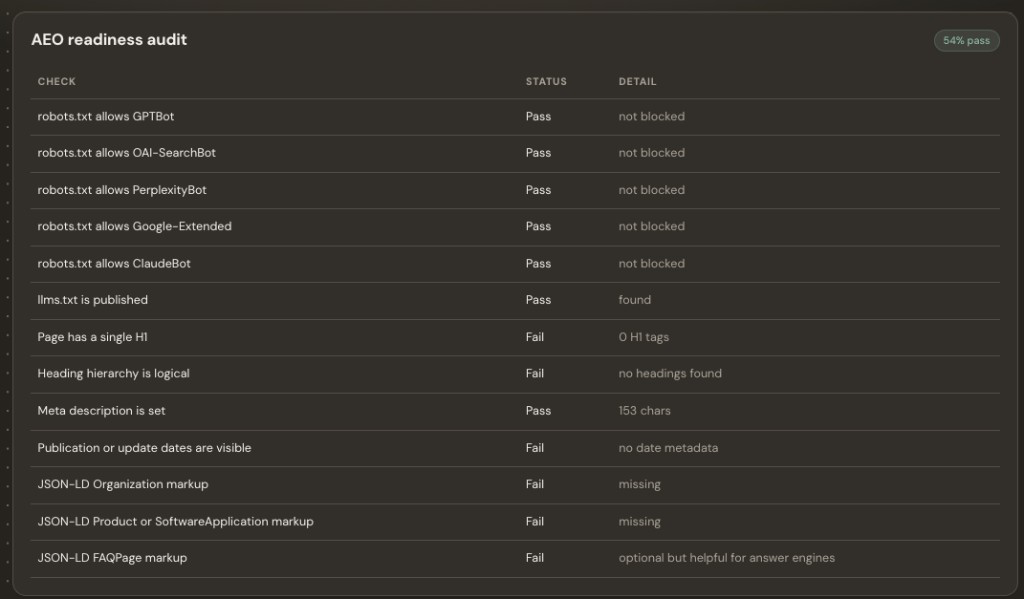
AI visibility fetches the homepage, follows the redirect, and scores the host you landed on. A link that starts on http and ends on https://www is judged at the end, not at the address you typed.
The checks are specific:
- robots.txt allows the bots those engines use, including GPTBot, OAI-SearchBot, PerplexityBot, Google-Extended, and ClaudeBot.
- llms.txt is published.
- The page has one H1, and the headings do not skip around.
- A meta description is set.
- Dates are visible when the page is the kind of page that should have them.
- JSON-LD includes an organization, and a product or software application when that is what you sell. FAQ markup is optional. It helps answer engines. It is not required to pass.
A failed llms.txt line means the file is missing or not a 200. It does not mean you need a 40-page manifesto. A short file that says what the product is, who it is for, and where the docs live is enough to start.
Fix the page, then measure the answers
The audit will not make an engine mention you. It removes the reasons an engine cannot read you. After the page is readable, the mention score is the other check: the same buyer questions, asked of Gemini, ChatGPT, and Perplexity on their own cadence.
A manual visibility run also refreshes this audit, and it is limited to once every 7 days. The audit alone is not on that timer. Change the homepage, run the audit, and read the lines that failed. Do not spend a model call to learn that robots.txt still blocks a bot.
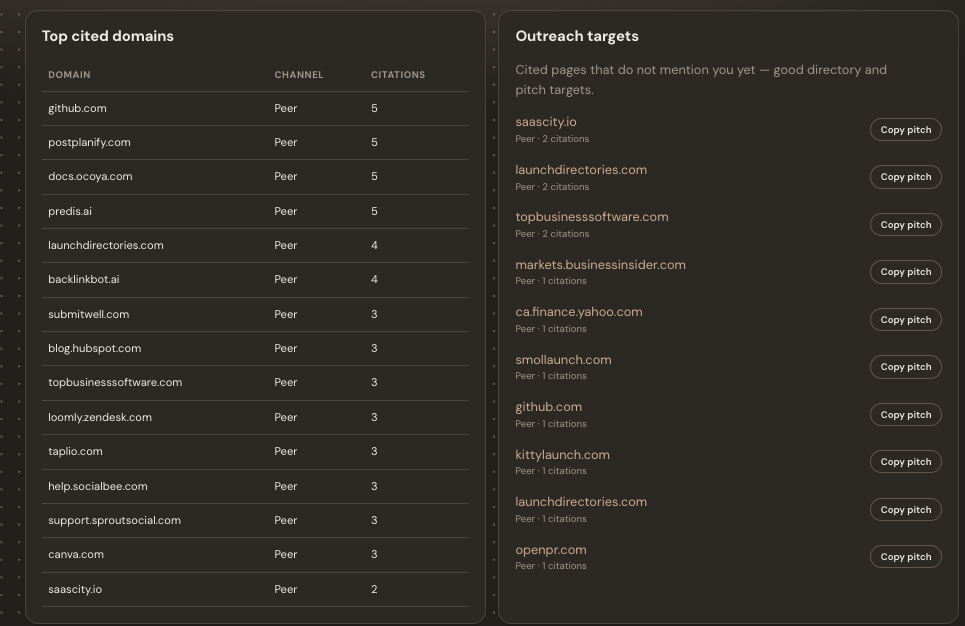
The same answers list the domains they cited. A peer page on that list that never mentions you is a directory to join or a pitch to copy. Copy pitch only copies the draft.
A pass is not a redesign
You do not need a new homepage to clear the audit. One H1 that says what the product does, a meta description a stranger can use, and JSON-LD that names the organization and the software are enough for the markup lines. llms.txt can be a short text file at the root. robots.txt only needs to stop blocking the bots you decided to allow.
If the audit fails because the fetch followed a redirect to a parked page or a login wall, fix that before you touch copy. The score is for the URL buyers and bots actually land on. A marketing page that immediately redirects to an app login will fail headings and markup, and it should. Leave the app behind the login. Let the public page say what the product is.
Do not hide the product from the bots you want
Some teams block every AI crawler and then wonder why answers cite a third-party list. If you want to be named, the bots that fetch pages for answers need a path to the homepage and the docs. Blocking them is a choice. The audit only tells you which choice the file currently makes.
Paste your site when you want drafts for the communities that already discuss tools like yours. Run the audit when you want to know if the homepage is even available to be cited.