 ProductPost 360
Blog
Measure the rooms that send people
Communities keep posts that help. Track which rooms send signups, and draft each one from the release instead of rewriting it by hand.
Communities will tolerate a lot from someone who helps. They have very little patience for an account that only appears when there is a link to drop. The posts that are still up next month are the ones a stranger can use, and the ones you can tie back to a person who tried the product.
Upvotes are a nice afternoon. They are a poor way to decide where to spend the next quarter. Two or three rooms usually send most of the people who sign up. You only find them if every link can be traced, and if you are still allowed to post when the quarter ends.
Five checks before you publish
Run these on the draft, out loud if you have to.
- The post is still useful with the link removed.
- You have helped someone in this room in the last few weeks.
- You are inside this room’s own rules: the day, the thread, the flair, the link policy.
- This text is not already sitting in another community from this morning.
- You can reply for the next day or two, including when the comments are critical.
Wait until you can say yes to most of them. A late post in the right thread beats an early one that gets removed, and a removed post takes the account with it more often than founders expect.
The draft should already fit the room
Those checks fail when you are rewriting a changelog at midnight, because the only version you have is the announcement. productpost360.com writes the first draft from the release you already published, in the shape that room expects. The check becomes a question about the post, which is the question you wanted, instead of a hunt for an hour to start typing.
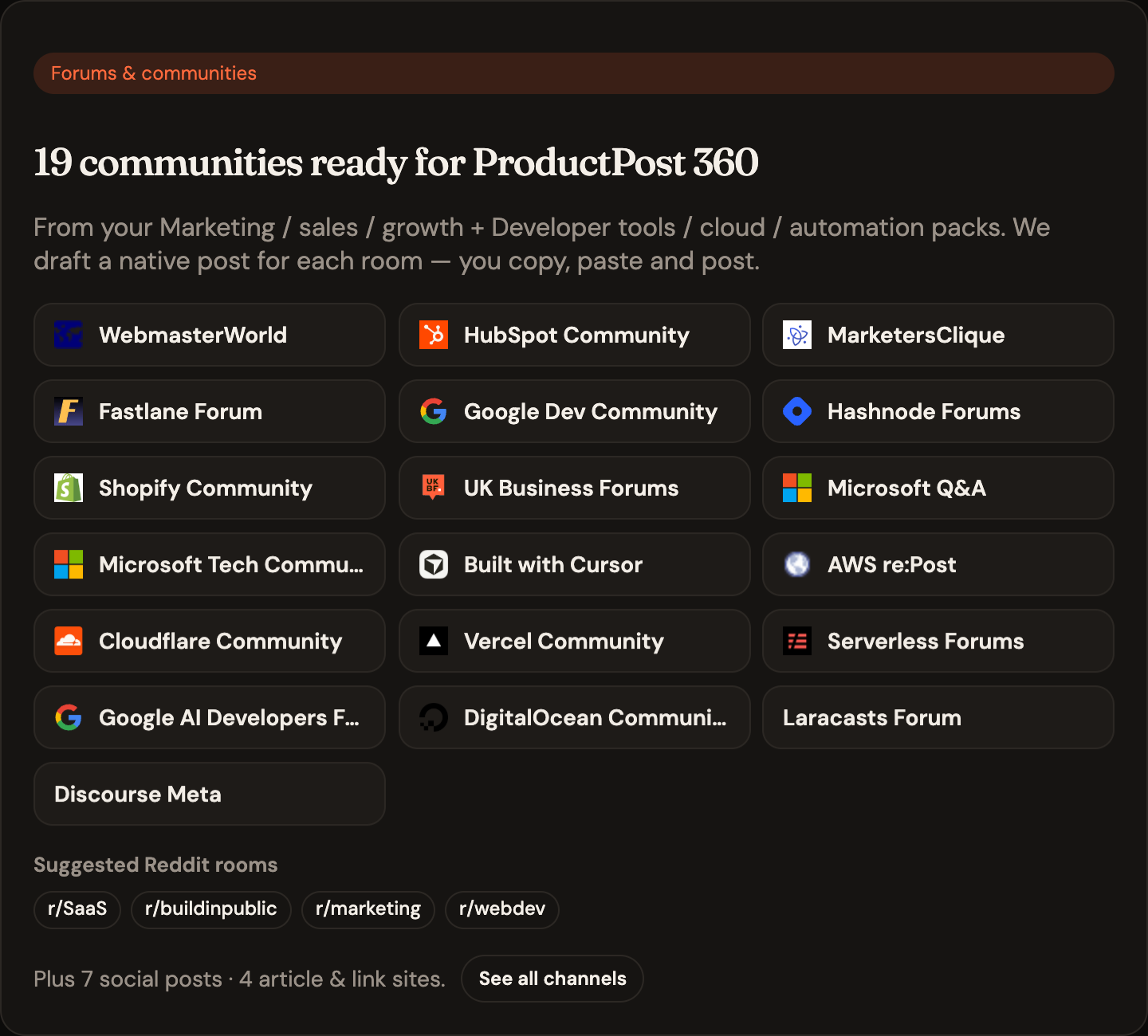
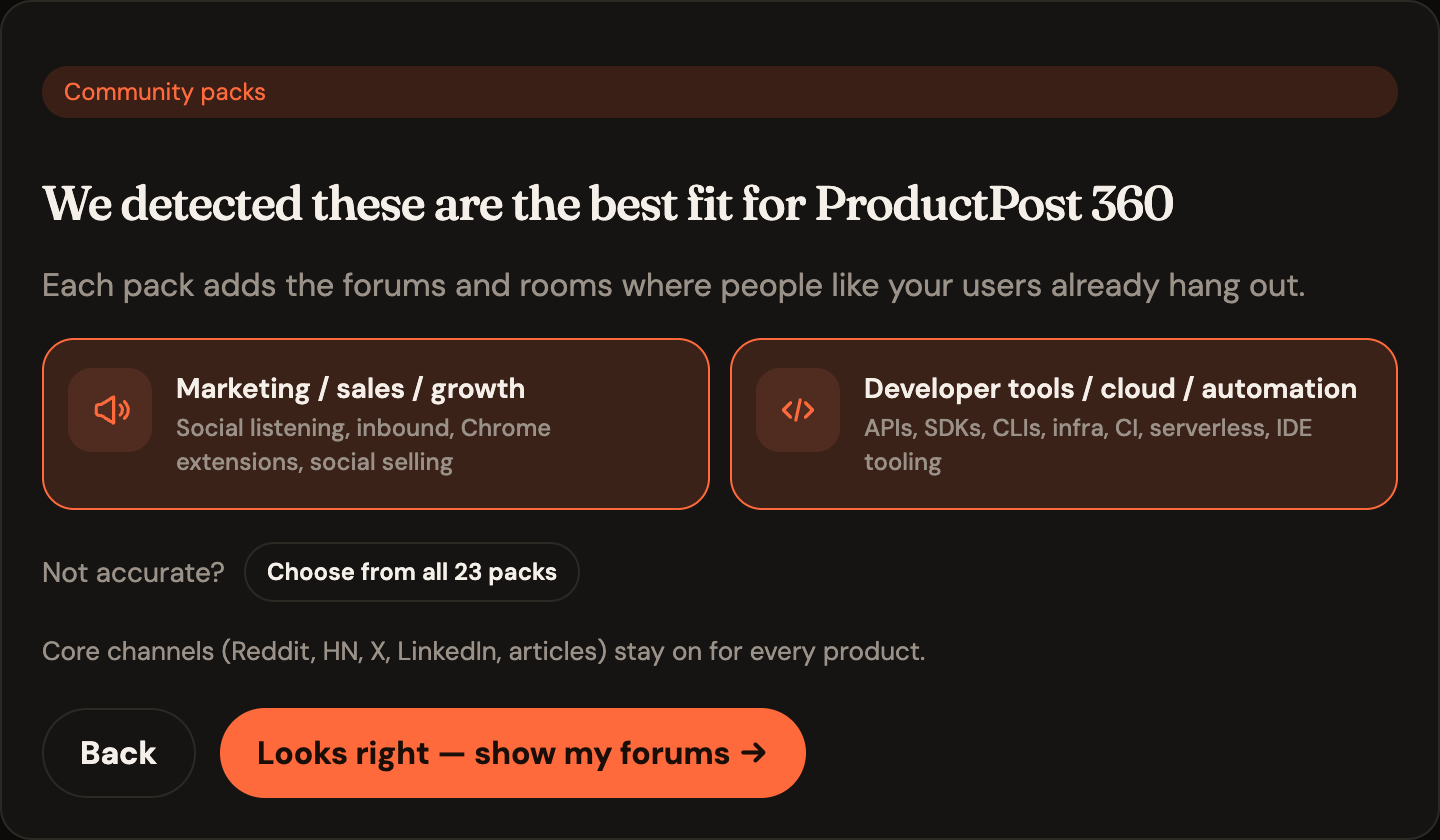
The same release can be a story in a subreddit, a decision on Indie Hackers, a full tutorial on Dev.to or Hashnode, and two sentences in the right Slack channel. You choose which of those to publish this week. The others can wait for a ship they fit better. A plan that lists many rooms is a menu. The posts you put up are the ones that pass the checks.
Count the people who show up
Put a UTM parameter on every link you paste. After a month you can see which community sent the visit, separate from the threads that only collected compliments. Connect Google Search Console as well. Day 14 is the first useful read: the drafts have had time to land, and you can compare those days with the ones before them. Impressions and clicks on your own site are the record that remains after the thread goes quiet.
Once a quarter, sort the rooms by signups. Spend more time in the two or three that send people who try the product. Take the quiet ones off the list, even if a thread there once did well. A channel is the rooms that keep working, kept small enough that you still reply.
You stay in the thread
The draft is the start. The reply is what makes the room a channel. ProductPost 360 leaves publishing to you. A post that search can still find next month, with a link back to the product, comes from an account the moderators have allowed to stay. That account posts, answers, and comes back the following week with something else that is useful.
A launch is a day. These rooms pay off across a year of small posts, and only if you can see which of those posts brought someone in.