 ProductPost 360
Blog
The questions you choose to track
AI visibility asks Gemini, ChatGPT, and Perplexity the buyer questions you edit, then shows mention rate, share of voice, and the domains they cited.
One chat is an anecdote. A founder asks for the best tool in the category, sees three names, and none of them is theirs. A customer says another engine recommended them the next day. Both can be true. AI Visibility is the record: the same buyer questions, asked of Gemini, ChatGPT, and Perplexity, kept with a date so the next run has something to sit beside.
The page in the shots is ThinkReview’s. The prompts are the kind you should write for your own product. How often answer engines mention you is the measurement. This is the page you edit.
Write the question a buyer would type
The prompt list is the product. Suggestions start from what you sell. You can replace any of them before a run, and you should, until each line is a job someone is trying to finish.
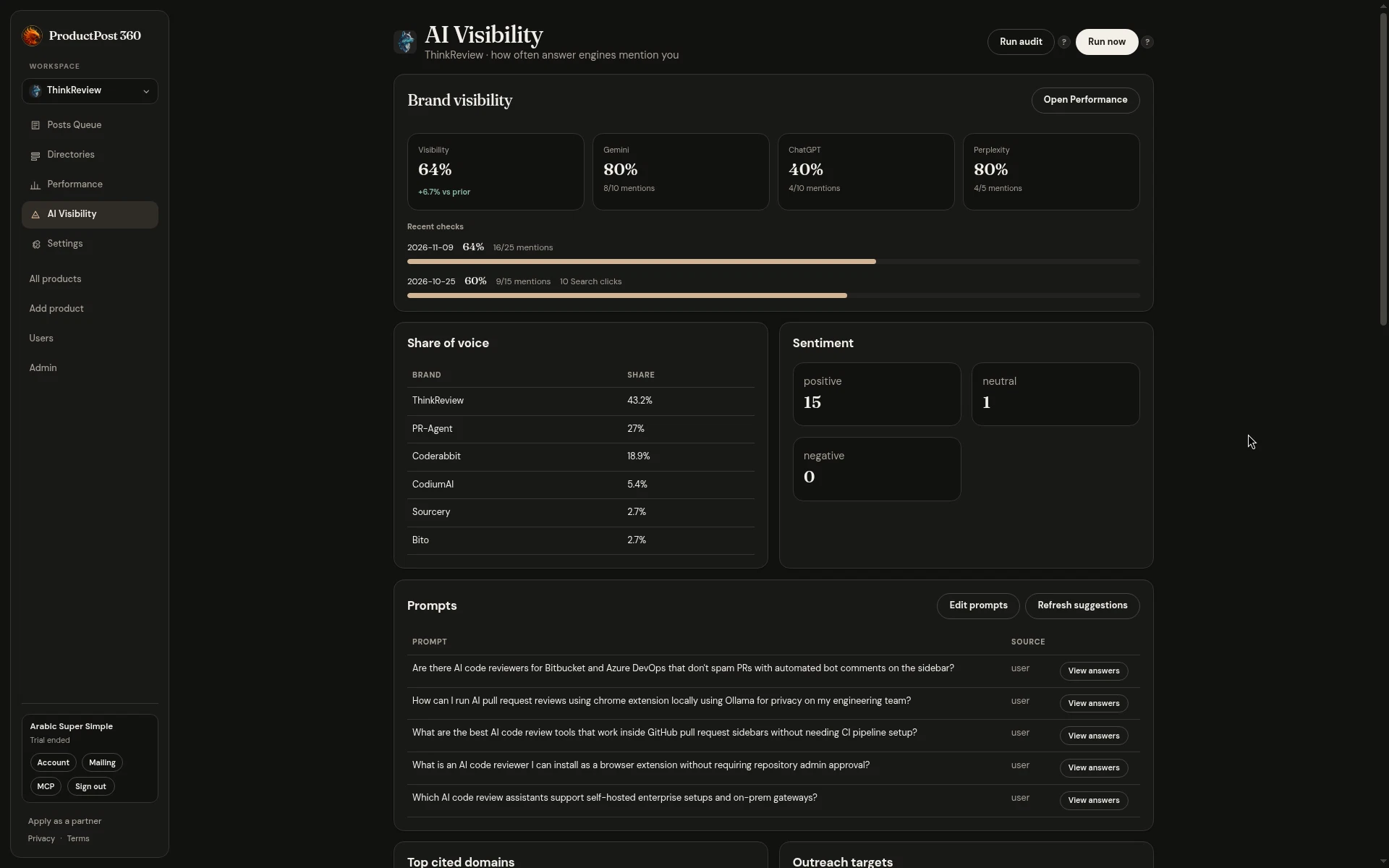
ThinkReview tracks questions a developer would actually ask: a code review in the pull request sidebar, a browser extension that skips repo admin approval, a self-hosted setup. Those are jobs. “ThinkReview review” is a brand query, and a brand query mostly tells you whether the engine has heard the name.
A prompt that is too close to your docs will flatter you. A prompt that is really this week’s news will swing around for reasons that have nothing to do with the product. Edit toward the constraint the buyer has: the host, the privacy rule, the thing they refuse to install.
Run now asks the three engines and updates the page. You can do that once every 7 days. Scheduled checks keep going in between: Gemini and ChatGPT about every 14 days, Perplexity about every 28. Changing the prompts every morning makes the percent move because you moved the question.
Mention rate and share of voice
Visibility on this check is 64 percent, up a little from the prior run. The engines do not share that number. Gemini and Perplexity named the product on most of the answers. ChatGPT named it on fewer. A single blended percent hides that split, which is why the four cards sit in a row.
Share of voice is the rest of the answer. Leading the list at 43 percent, with the next tool at 27 and a trail of smaller names, means the reply mentions you and then spends real space on someone else. A high mention rate with a thin share is the same story in one sentence: you are in the answer, and you are not the answer.
Sentiment on this run is almost all positive, with a single neutral and no negative. That is a check on tone, and a small one. A negative cluster is a reason to read the answers. A sea of polite positives is not a growth plan.
Use the split this way:
- One engine is quiet and the others are not. Tighten the prompt toward a job that engine can answer with a tool, and wait for the next scheduled run.
- You are mentioned, and a competitor owns the rest of the reply. The work is the pages and the rooms where that comparison already happens, which is the drafts, not another refresh.
- Every engine names only you. The prompts are probably too close to your brand. Add a question a skeptical buyer would ask with your name left out.
Then look at who was cited
Under the prompts, the page lists the domains the answers relied on, and the ones that never mention you. Those are labeled: your site, a competitor, a page you earned, or a peer in the category. A peer that shows up often, and never says your name, is a page a buyer already meets inside the answer.
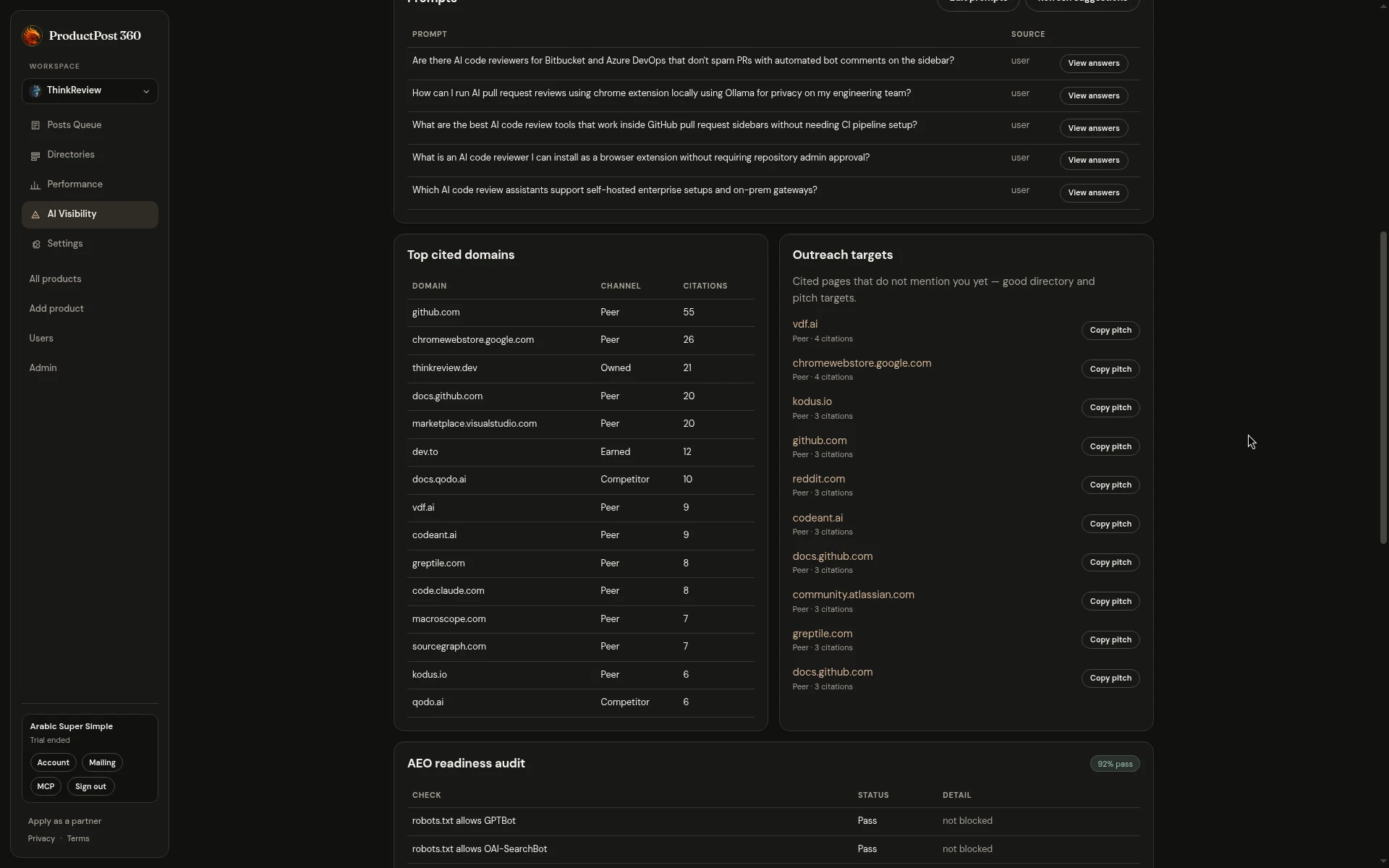
Copy pitch puts a short note on your clipboard. You decide whether that site is a place you can show up. The product does not email the author, comment for you, or post the pitch. Three pages a buyer already sees are enough to start. A competitor’s docs can sit on the list and still be the wrong place to write.
Save a URL into Directories when the right move is a listing. Open the posts queue when the right move is a draft for a room that site’s readers already use. The mention rate on the next run is how you tell whether any of that showed up in the answers, and it will not move because you clicked Run now twice.