 ProductPost 360
Blog
The rooms you keep on
Community packs suggest the forums that match the product. The channel list is the shorter set you will actually post in, reply in, and measure.
The catalog is long. A posting plan is short. Settings is where those two meet: community packs that suggest the niche rooms, and a channel list where you turn rooms off until the remainder is a set you will actually use.
Drafts are written for the rooms that stay on. A room you will never open still costs you a draft, a paste you skip, and a vague sense that distribution is behind. Turn it off.
Packs are a starting guess
Packs group forums by the buyer. Ecommerce, developer tools, restaurants, fintech, education, and the rest. Building the pack from your URL selects the ones that look like the product. You can change the guess.
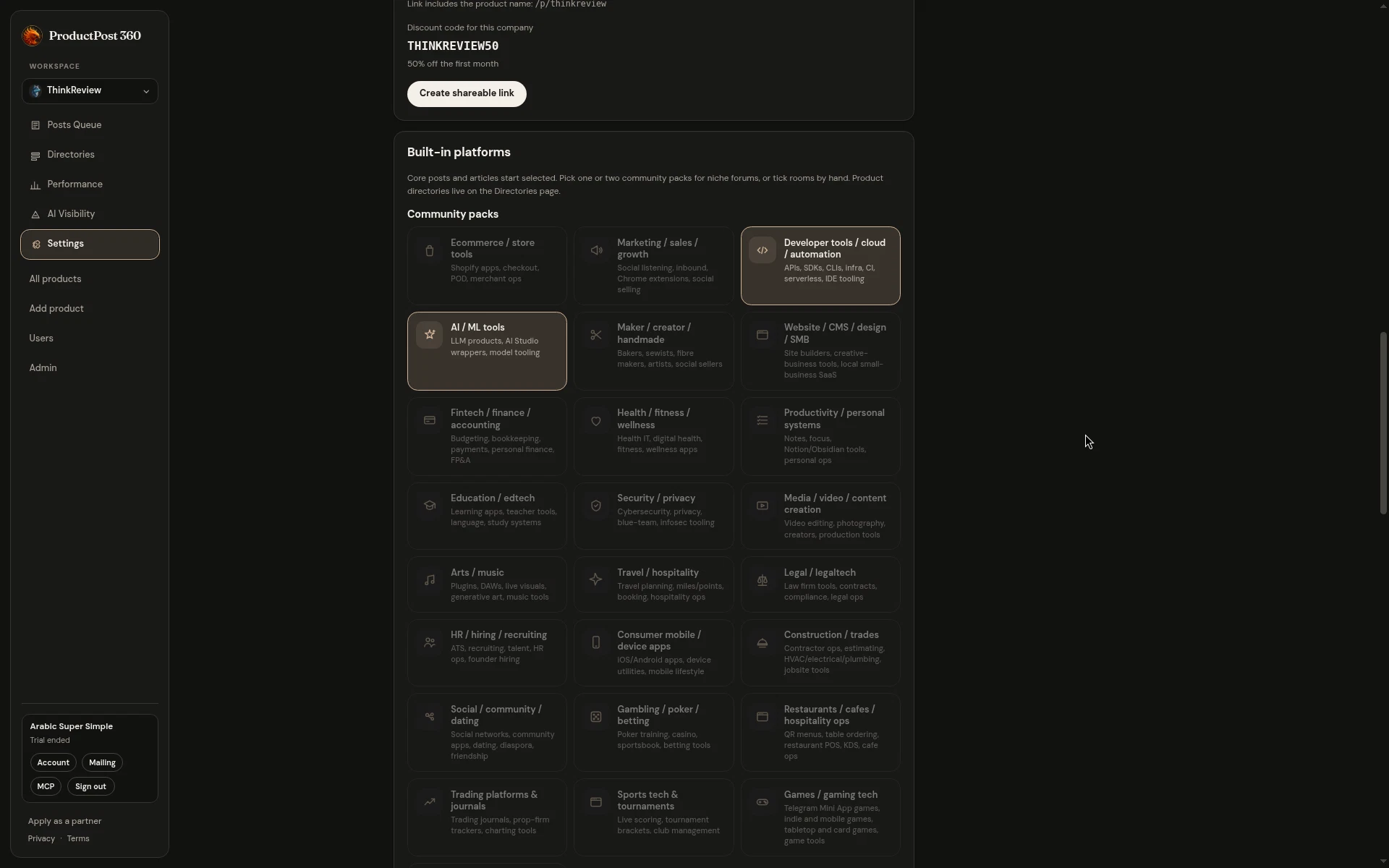
ThinkReview keeps developer tools and AI tools on. A code review sidebar is a plausible topic in those rooms. It is a poor topic in a restaurant pack, a poker pack, or a marketplace for handmade goods. Those packs exist for products whose buyers are already there. Select them on that product. Leave them off on this one.
A second product in the same account can carry a different pair. A founder with a dev tool and a separate booking app should give each its own packs. Shared packs across unrelated products are how a cafe forum receives a changelog about pull requests.
Core posts and article sites stay available on every product: the places a public essay or a short update can go, whatever the niche. The packs add the forums. Tick one or two. Add a third only when you can name the room and the kind of post it wants.
Then edit the list by hand
Under the packs, the channel list is grouped.
- Share, links, and the sites that want an article, such as Dev.to, Medium, and Hashnode. These are where a canonical post can live.
- Posts: X, LinkedIn, Reddit, Hacker News, and the other short or threaded feeds. These are where a single source becomes a native draft.
- Forums: the long tail from the packs, plus any room you add. This is the list that gets people into trouble, because it is long enough to select all.
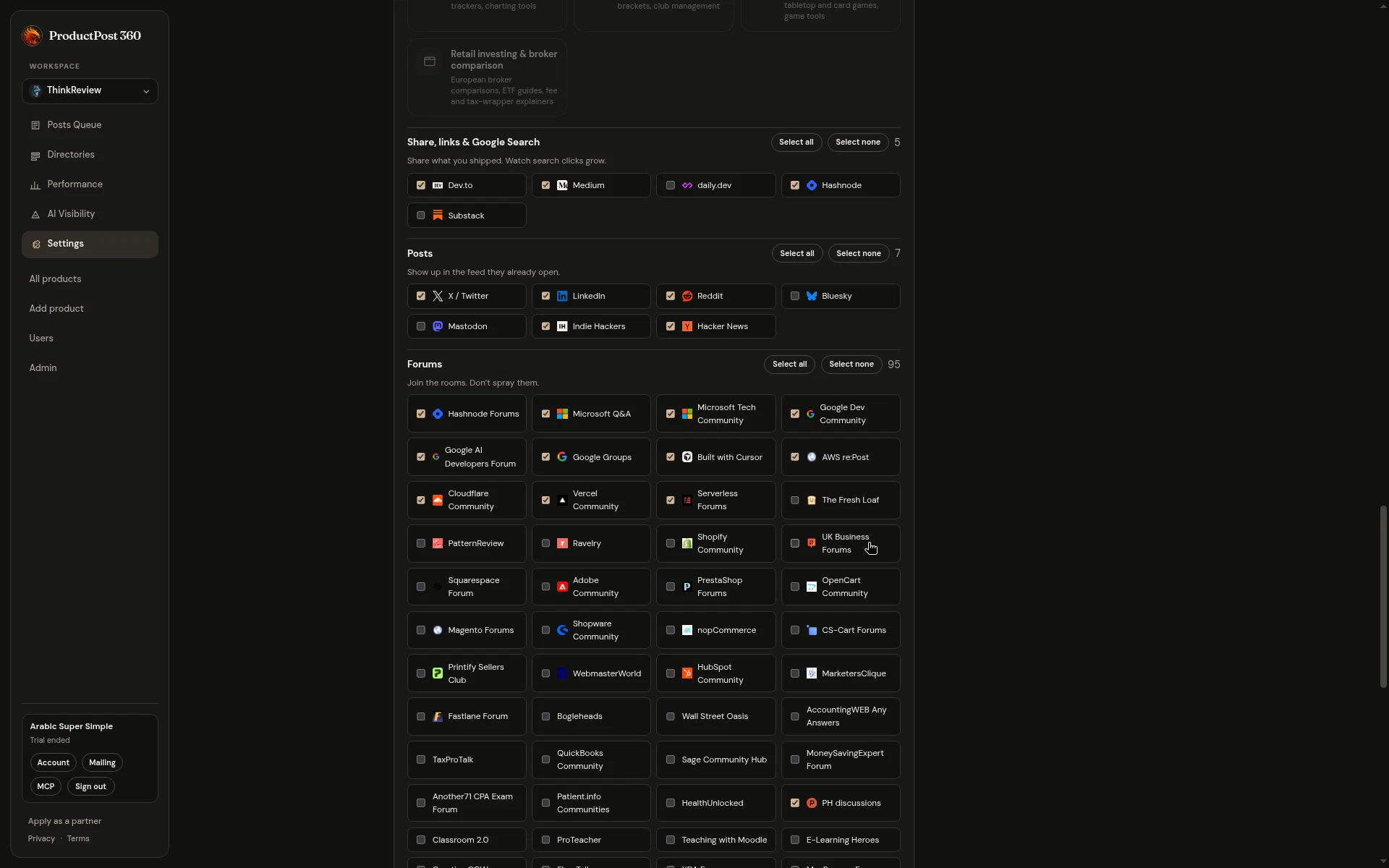
Select all is how the drafts get thin. The product will write a version for every room you leave on, three at a time as you open a source, and the fifth version of a bugfix for a forum you have never read is how accounts get removed.
Keep a room on when you can say yes to three things.
- People there already ask the question this product answers.
- You have read the rules, including whether a link is allowed in the post, the comment, or not this month.
- You can reply for a day or two after you paste, including when the replies are skeptical.
A forum that fails any of those stays off, even if a pack suggested it. You can add a platform by hand when the pack missed a room your customers named. The customers’ answer beats the guess.
What you do with a short list
Eight to twelve rooms is a year of work for a small team. The posts queue then shows drafts for places you recognize. Performance can show you, after a few weeks, which of those referrers sent anyone. AI visibility can show you whether the pages in those rooms are the ones answers cite.
A long list feels like coverage. The rooms you keep on are the coverage you can still be polite inside. Pick them in settings before you generate the next source, and the draft you open will be one you might actually paste.